
Part PART I
Understanding the Challenge
Chapter 1 of 3
India is Changing. So Must the Way We Age.
India is living longer than ever before. This is one of our greatest achievements. It also asks us to rethink how we support dignity, independence, and community in later life.
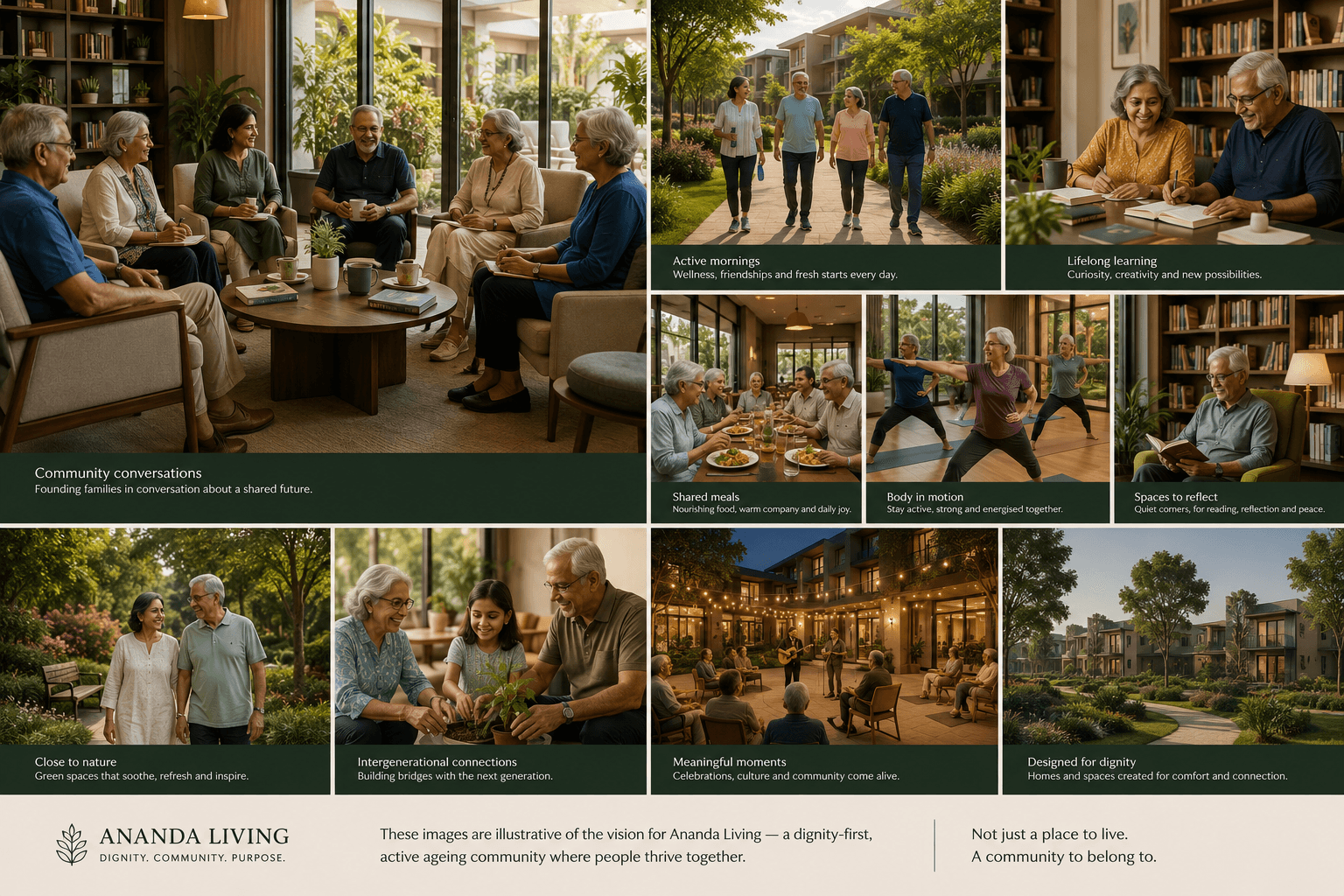
Demographic shift
A Quiet Transformation
India is ageing. Not dramatically. Not fearfully. Simply — and steadily — as a natural consequence of progress.
Life expectancy has risen across generations. Families are smaller. More Indians live in cities. Children build careers far from where they grew up. Retirements stretch longer. And more people expect to live independently well into their later years.
None of this is sudden. It is the quiet accumulation of better health, expanded opportunity, and a society in motion. India remains one of the youngest major nations on earth — and simultaneously, one where the share of older adults is rising faster than at any point in our modern history.
Understanding this shift is not about alarm. It is about awareness — so that families, communities, and institutions can prepare with clarity rather than surprise.
Ageing in India is not a crisis arriving overnight. It is a long, human story unfolding across decades.
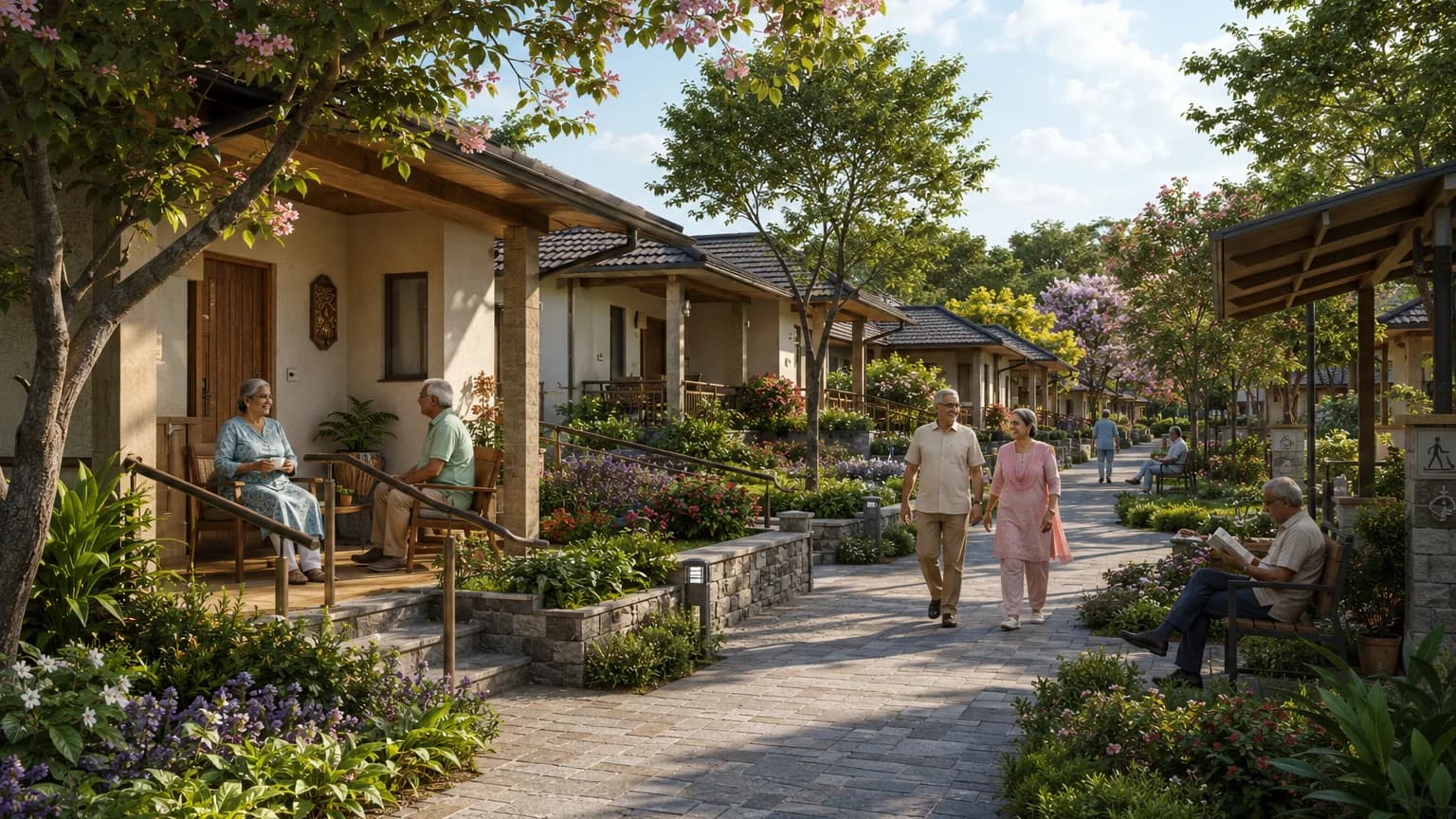
Societal evolution
What Has Changed?
For much of India's history, ageing unfolded within large, multigenerational households. Care, companionship, and daily rhythm were woven into shared roofs and shared meals.
Over the last few decades, that picture has evolved. Cities expanded. Education and employment drew families across states — and across continents. Women entered the workforce in greater numbers. Households became smaller. Retirements grew longer than many had planned for.
This is not a story of families failing one another. It is the story of a nation transforming — economically, geographically, and culturally. Love and duty remain. What has shifted is the architecture of everyday life: the distance between parents and children, the pace of work, and the number of years one may live after stepping away from a career.
India's older adults today often remain active, curious, and engaged. What they seek is not withdrawal — but continuity: purpose, friendship, movement, and the freedom to choose how later life is lived.
Mid–20th century
Joint households as the norm
Most elders lived within extended families. Daily care and companionship were embedded in household life.
Next period1990s–2000s
Economic opening and urban migration
New opportunities drew younger generations to cities — and, increasingly, abroad — reshaping how families stayed connected.
Next period2010s
Smaller families, longer lives
Declining fertility and rising life expectancy began to reshape the ratio of elders to working-age adults.
Next periodToday
Independent, active later life
More older adults expect autonomy, community, and purpose — not as exceptions, but as a new baseline.
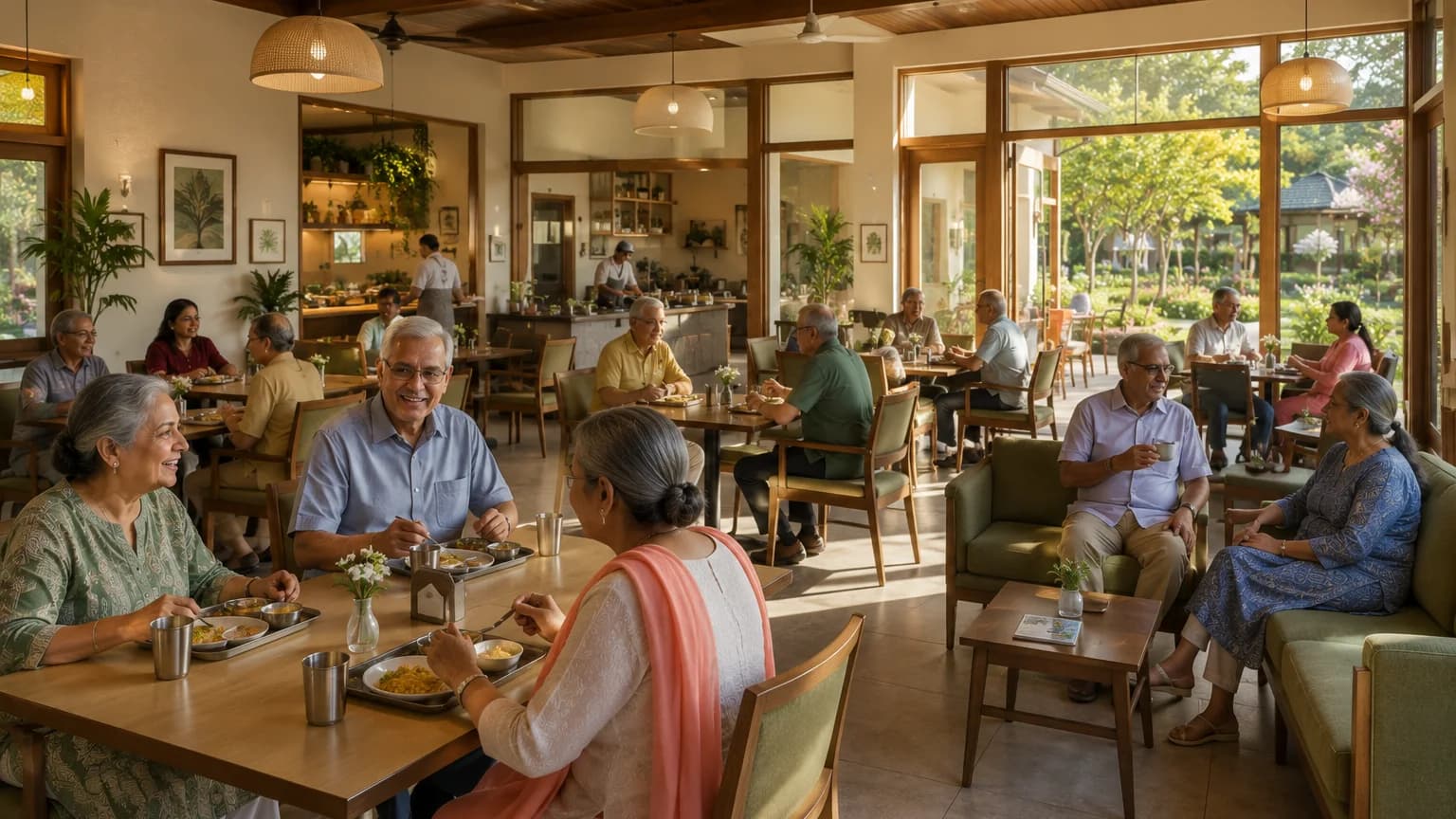
Reframing ageing
The Opportunity
Longer lives are not inherently a burden. They are, at their core, an achievement — the product of better nutrition, healthcare, sanitation, and stability across generations.
More years open more possibilities: to learn, to mentor, to volunteer, to deepen friendships, to discover new interests, and to contribute to community life long after a career ends.
This is what the World Health Organization calls active ageing — the idea that health, participation, and security combine to extend quality of life, not merely its length.
India's challenge is not that its people are living longer. It is ensuring that longer lives are lived with dignity, connection, and choice — in cities and towns, within families and beyond them.
- Purpose
- Learning
- Friendship
- Contribution
- Movement
- Volunteering
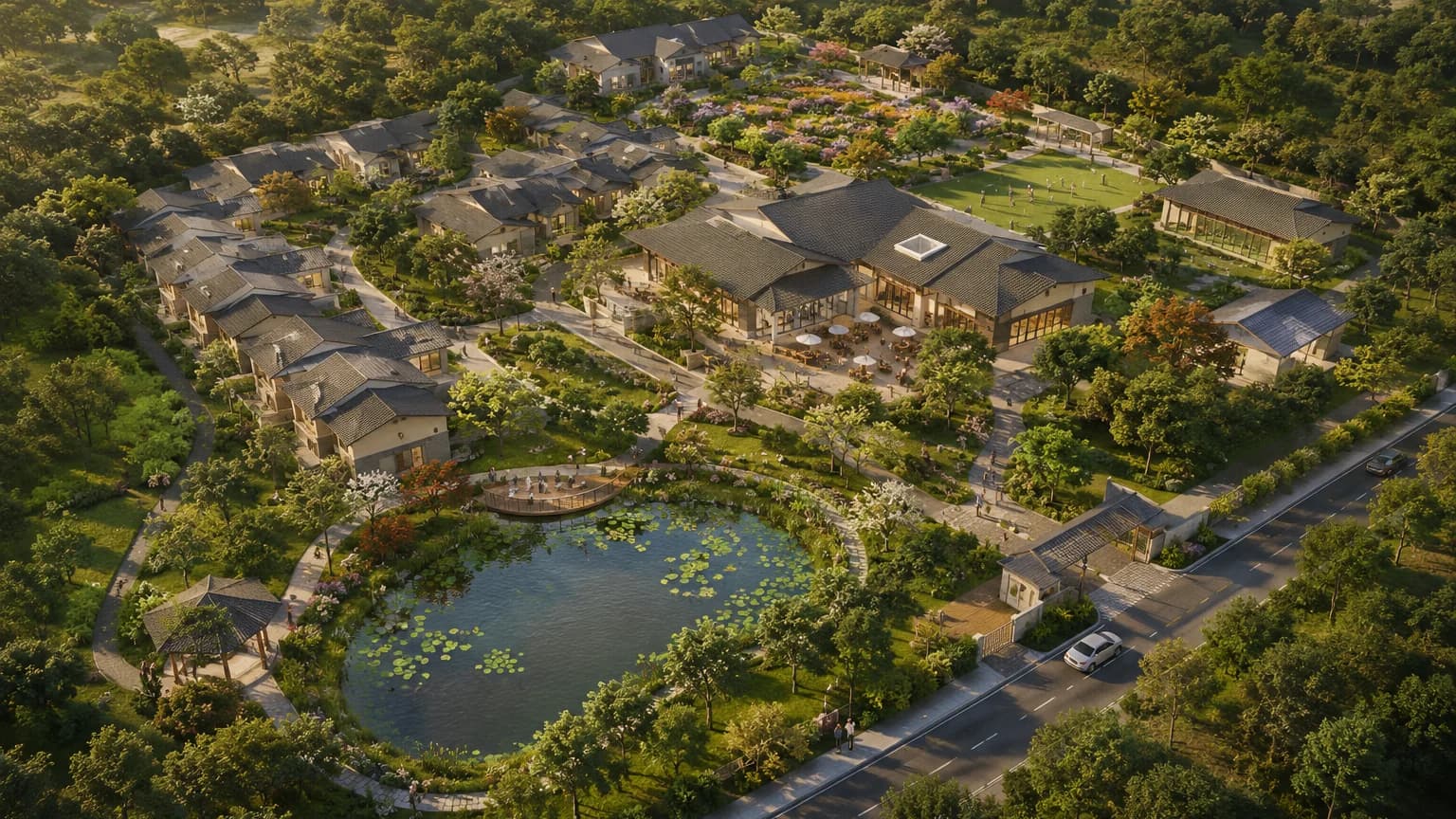
If India is changing…
shouldn't the way we age evolve too?
India stands at a remarkable moment. It is still young — median age under thirty — yet ageing faster than ever before in its history.
This is not a crisis. It is a once-in-a-generation opportunity: to define what dignity, independence, and community mean for the millions who will live longer than any previous generation.
The question is not whether India will age. It already is. The question is whether we will shape that transition with intention — creating spaces for connection, purpose, and choice long before care becomes urgent.
What comes next is not fear. It is design — thoughtful, humane, and rooted in the India we are becoming.
What the data tells us
Every figure below is drawn from a published, authoritative source. We do not invent or exaggerate statistics on this page.
- 72 years
- Life expectancy at birth
- India, 2024 estimate
- 1.9
- Total fertility rate
- Below the replacement level of 2.1
- 10.1%
- Share of population aged 60+
- Up from 5.6% in 1961
- 11.1%
- Share of population aged 60+
- Approximately 162 million people, 2025
- 20.6%
- Projected share aged 60+ by 2050
- Approximately 346 million people
- 5.7%
- Elders aged 60+ living alone
- A rising share alongside new household patterns
- 13.2 years
- Healthy life expectancy at age 60
- Additional years in full health, on average
- 19%
- Projected share aged 60+ by 2050
- From 8% in 2015 — a long demographic arc
- 19.5%
- Projected share aged 60+ by 2050
- Approximately 319 million older adults
Reflection
References
- Sample Registration System (SRS) Statistical Report 2024 (opens in new tab)
- Elderly in India 2021 (opens in new tab)
- World Population Prospects 2024 (opens in new tab)
- Longitudinal Ageing Study in India (LASI) Wave 1, 2017–18 (opens in new tab)
- Global Health Estimates (opens in new tab)
- Caring for Our Elders: India Ageing Report 2017 (opens in new tab)
- Senior Care Reforms in India: Reimagining the Senior Care Paradigm (opens in new tab)