
Part PART I
Understanding the Challenge
Chapter 2 of 3
Why India Needs a New Model
Every generation creates institutions for the society it lives in. As India changes, we have an opportunity to rethink how we support dignity, independence, and community in later life.
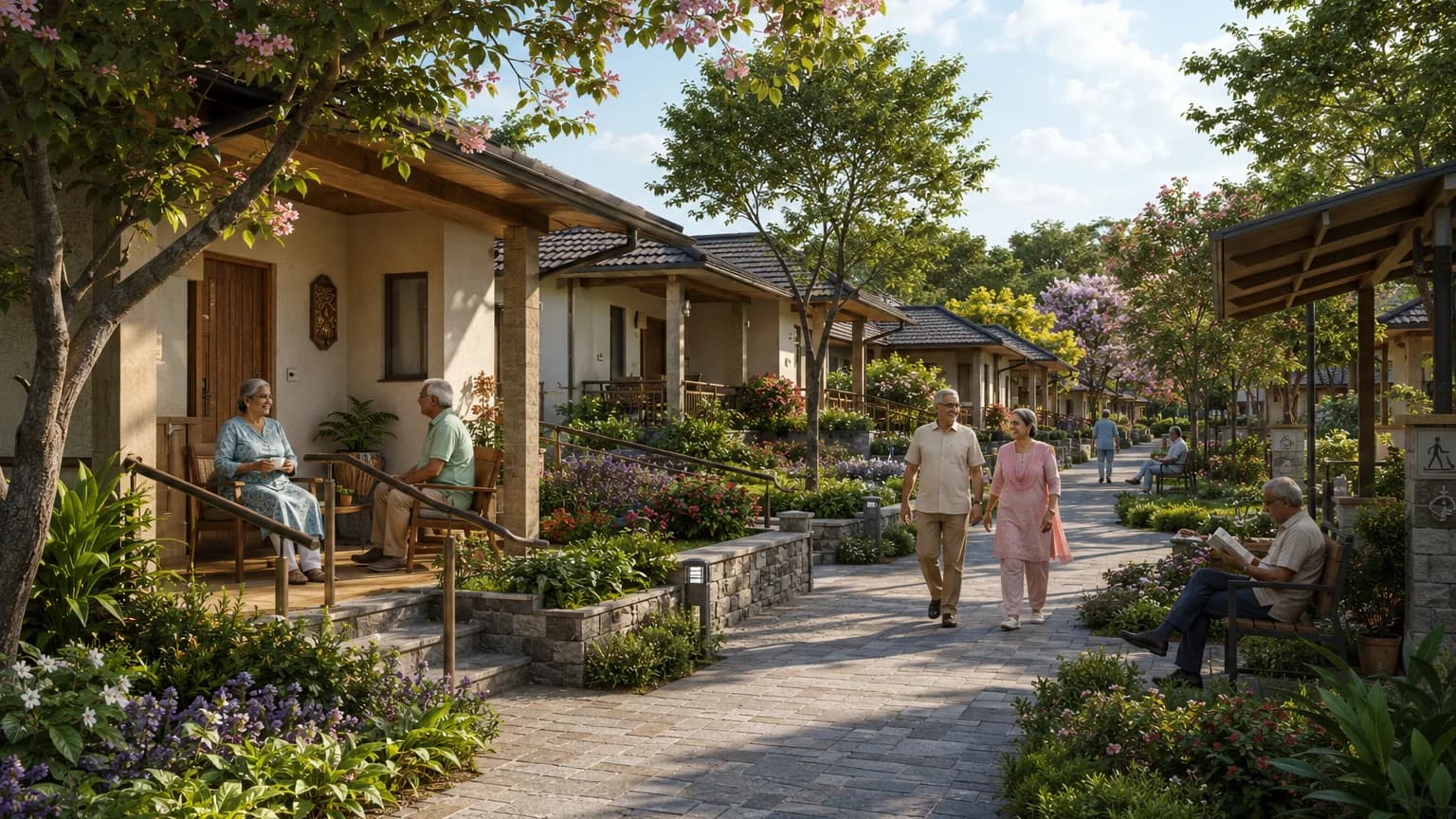
What came before
What Worked Yesterday
For generations, India's response to later life was embedded in the fabric of everyday life — not in separate institutions, but in relationships.
Joint families offered continuity: shared meals, shared roofs, and the quiet assurance that someone would be there. Neighbourhoods functioned as extended communities, where elders were visible, known, and woven into daily rhythm. Retirement, for many, was a brief transition rather than a long chapter — a few years of rest before the natural course of life.
These arrangements were not perfect. But they were coherent. They matched the society that created them: larger households, shorter retirements, children living close to parents, and a pace of life that allowed presence to substitute for planning.
They served India well. And in many places, they still do. What has changed is the society around them — the India they were designed for, while still present in memory and in practice, is no longer the only India we inhabit.
Previous models were not wrong. They were built for the world their generation knew.
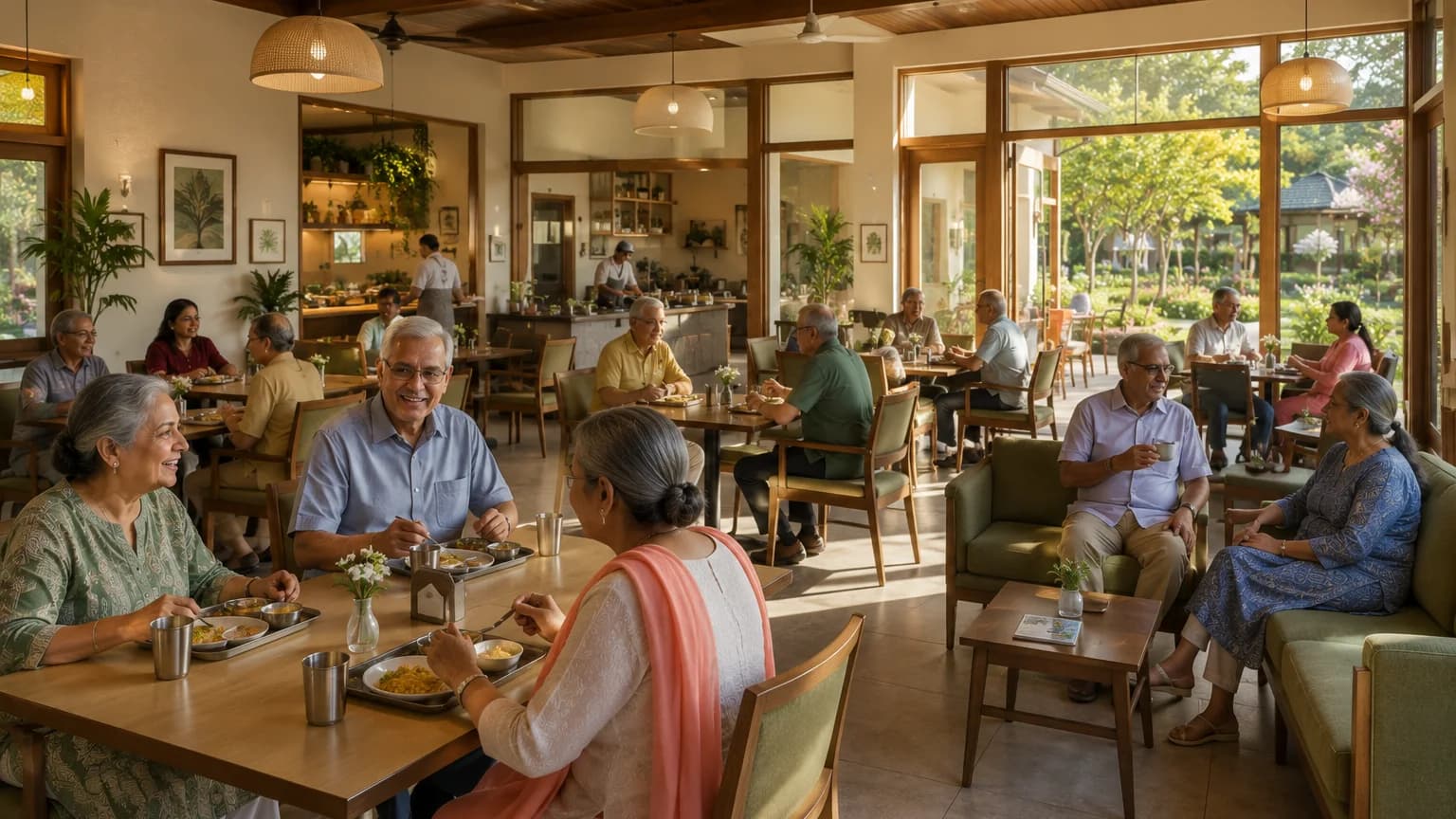
Progress, not decline
A Different India
Today's India is shaped by forces that previous generations could scarcely have imagined — and many of them are signs of progress.
More Indians live in cities than ever before. Careers span continents. Households are smaller, not because love has diminished, but because opportunity has expanded. Dual-income families are common. Technology connects us across distance — and sometimes across time zones. Healthcare has improved. Lives are longer. Retirements stretch across decades, not years.
Independence has become an aspiration, not an exception. Many older adults today do not wish to withdraw from life. They wish to remain engaged — learning, travelling, mentoring, contributing, choosing how each day is lived.
None of this diminishes the family. It simply means that the architecture of support must evolve alongside the architecture of society. When children build lives in Bengaluru, Singapore, or San Francisco, presence looks different. When a healthy 65-year-old may live another twenty years, the question is not only care — it is how those years are lived.
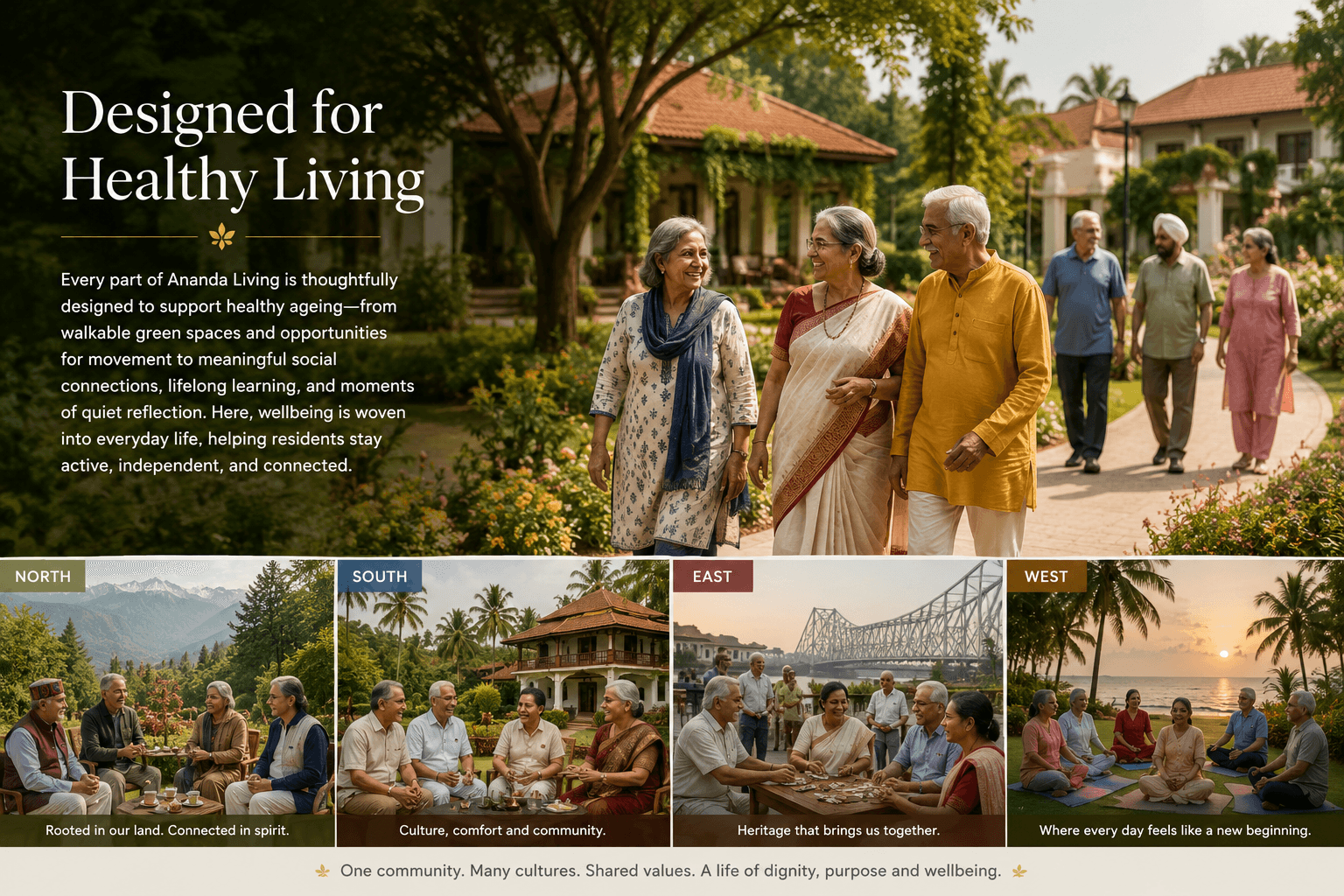
The heart of the matter
Beyond Care
When we speak of ageing, the conversation often turns quickly to healthcare — and healthcare matters deeply. But ageing is about more than medical need.
It is about waking with purpose. About friendship that does not depend on a family calendar. About movement, learning, and the freedom to choose. About belonging to something larger than a household — a community where one is known, valued, and invited to participate.
The World Health Organization describes healthy ageing as the process of developing and maintaining the functional ability that enables wellbeing in older age. That framing matters: it places dignity, participation, and security alongside clinical care — not beneath it.
Many people will never need intensive support. What they need, long before and long after, is a life worth living: conversation over meals, gardens to walk in, skills to share, rooms that feel like home, and the quiet confidence that later life is a continuation — not a conclusion.
This is not a rejection of families, hospitals, or existing institutions. It is an widening of the lens — from responding to decline, to enabling flourishing across the full arc of a longer life.
Care answers need. A new model must also answer possibility.
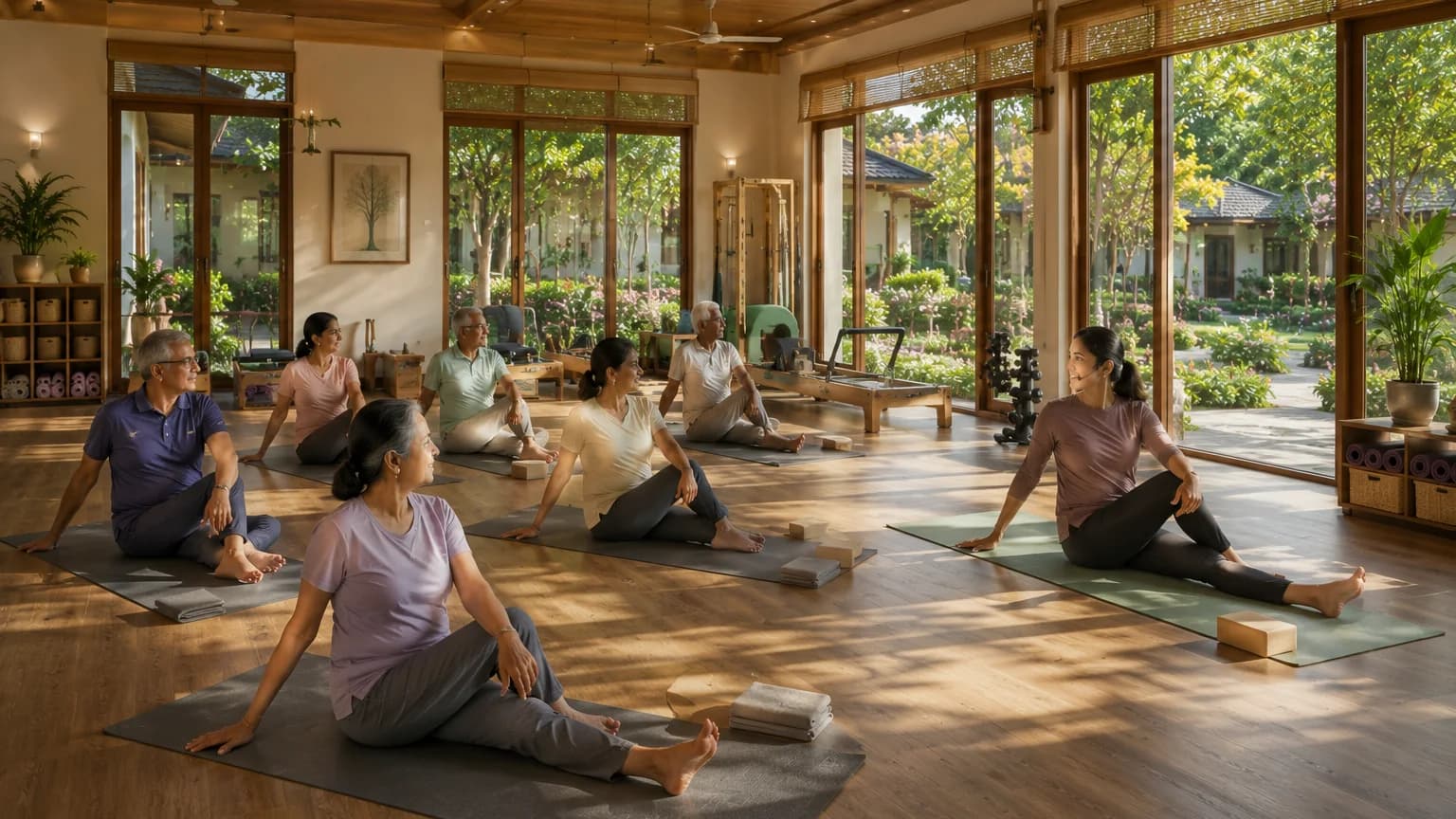
Institutional imagination
A New Opportunity
India has a remarkable capacity to build at scale when a generation decides something matters.
Previous generations built the schools that educated hundreds of millions. They built universities, hospitals, and public institutions that transformed daily life. In our own time, India has built digital infrastructure that reaches from villages to megacities — redefining access, connection, and opportunity.
Each of these was a response to a need its era recognised. Education for a young nation. Healthcare for a modernising society. Connectivity for a digital age.
Ageing is the next frontier — not because it is a problem to solve, but because longer lives are an achievement worth designing for. India has the chance to create a model of active ageing that the world respects: one rooted in dignity, independence, community, and choice — suited to Indian families, Indian cities, and Indian aspirations.
This is not about replacing what exists. It is about adding what is missing: spaces and systems designed for people who expect to live well, not merely to be looked after.
Earlier generations
Schools & literacy
Mass education for a young, growing nation.
Modern India
Universities & hospitals
Institutions for learning, healing, and professional life.
Recent decades
Digital infrastructure
Connectivity that reshaped access and opportunity.
The opportunity ahead
Communities for longer lives
Purposeful places designed for dignity, independence, and belonging.
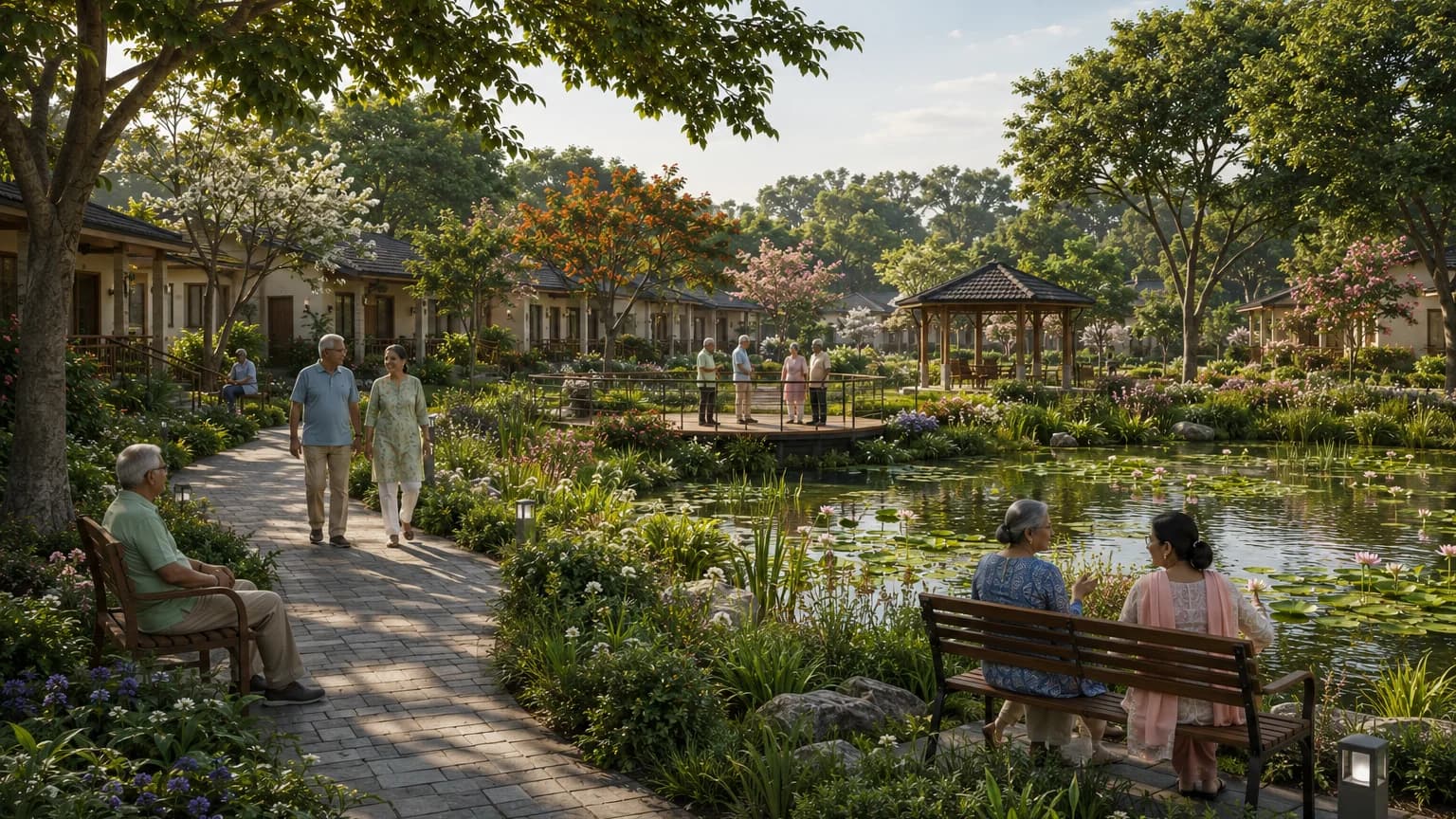
If the future will be different…
shouldn't the places we grow older be different too?
India does not need to fear its demographic future. It needs to imagine it — thoughtfully, respectfully, and with the same institutional ambition previous generations brought to education, health, and connectivity.
The next chapter explores one possible response to this opportunity: a model built around active ageing, designed for the India that is emerging.
Reflection
References
- World Health Organization — Decade of Healthy Ageing & healthy ageing framework (opens in new tab)
- United Nations Population Division — World Population Prospects (opens in new tab)
- Longitudinal Ageing Study in India (LASI) — IIPS & Ministry of Health and Family Welfare (opens in new tab)
- UNFPA India — Caring for Our Elders: India Ageing Report 2017 (opens in new tab)
- NITI Aayog — Senior Care Reforms in India (opens in new tab)
- MoSPI — Elderly in India 2021 (opens in new tab)